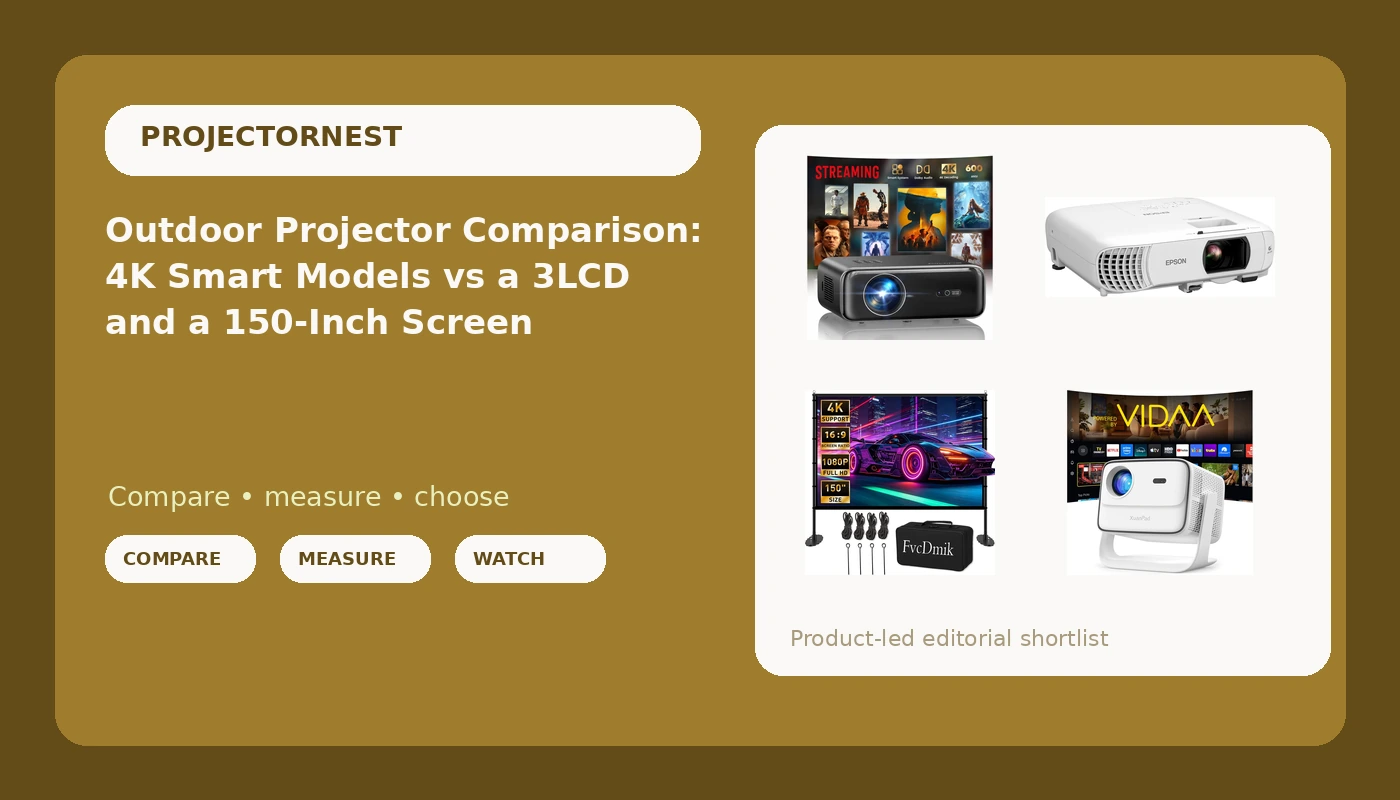
I have hung projectors in blacked-out basements and in living rooms where the sun wins by noon, and the lesson never changes: the room decides more than the projector does. That is the lens I bring to this outdoor projector comparison. Four products, one screen, and a question that matters more than any spec sheet, which is what happens when you turn the lights on or the porch lamp comes on at dusk.
Two of the picks here are smart outdoor projectors with apps built in. One is a traditional 3LCD movie projector with no smart platform at all. The fourth is not a projector, it is the 150 inch screen you are probably going to need, and I put it in the same table because I have watched people spend $600 on a projector and $30 on a bedsheet, then wonder why the image looks soft.
The short version: if you want one box that does everything outdoors, the XuanPad 4K smart projector is the most capable of the group on paper, and the P62 Pro is the value play. If your room is dark and you already own a streaming stick, the Epson Home Cinema 980 is the one an installer would quietly pick.
Here is how they stack up.
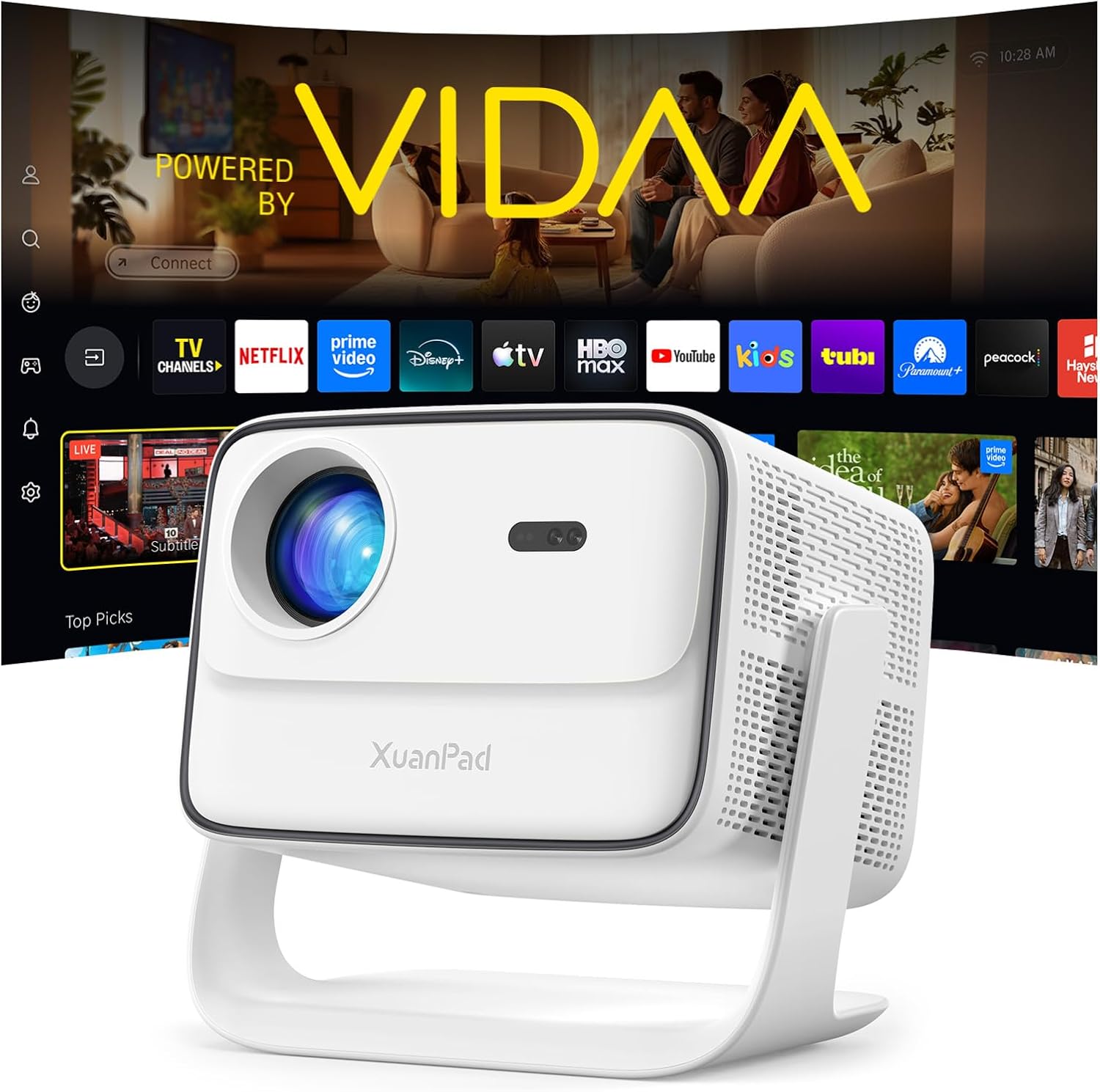
XuanPad 4K Smart Projector, 6000 ANSI, VIDAA Live TV, Netflix
Highest claimed brightness in the group, live TV and Netflix built in, 42W Dolby audio
The 6000 ANSI claim needs a dark room to believe, and a smart platform is not the same thing as good optics
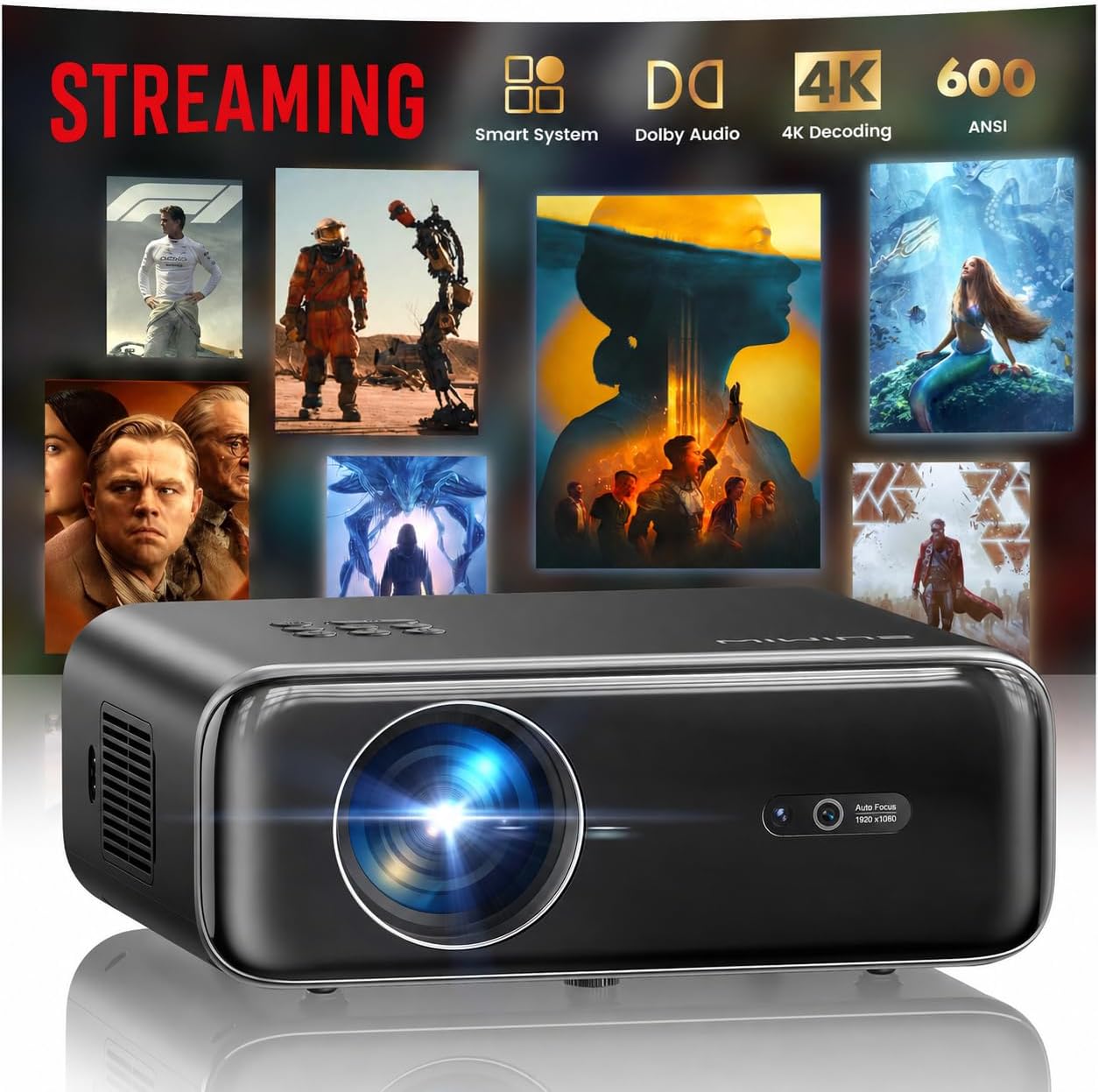
P62 Pro Smart Outdoor Projector, built-in apps, dual speakers
Cheapest path to a self-contained outdoor setup, YouTube and Prime Video onboard, auto focus
"4K support" is not native 4K, and dual speakers are a convenience, not a soundtrack
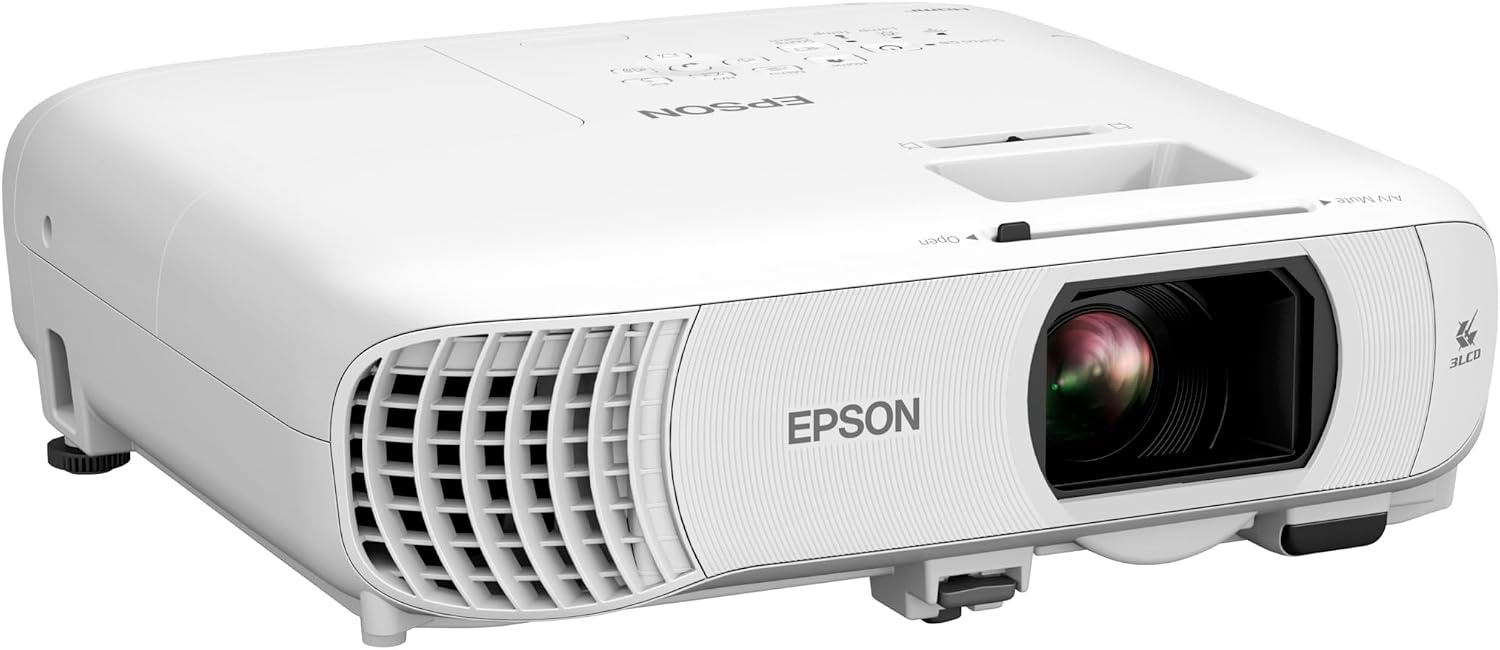
Epson Home Cinema 980 3-Chip 3LCD 1080p
Real 3-chip color, honest 1080p instead of a resolution claim, no smart platform to go obsolete
Needs a source device, and it is not built to be carried to the yard
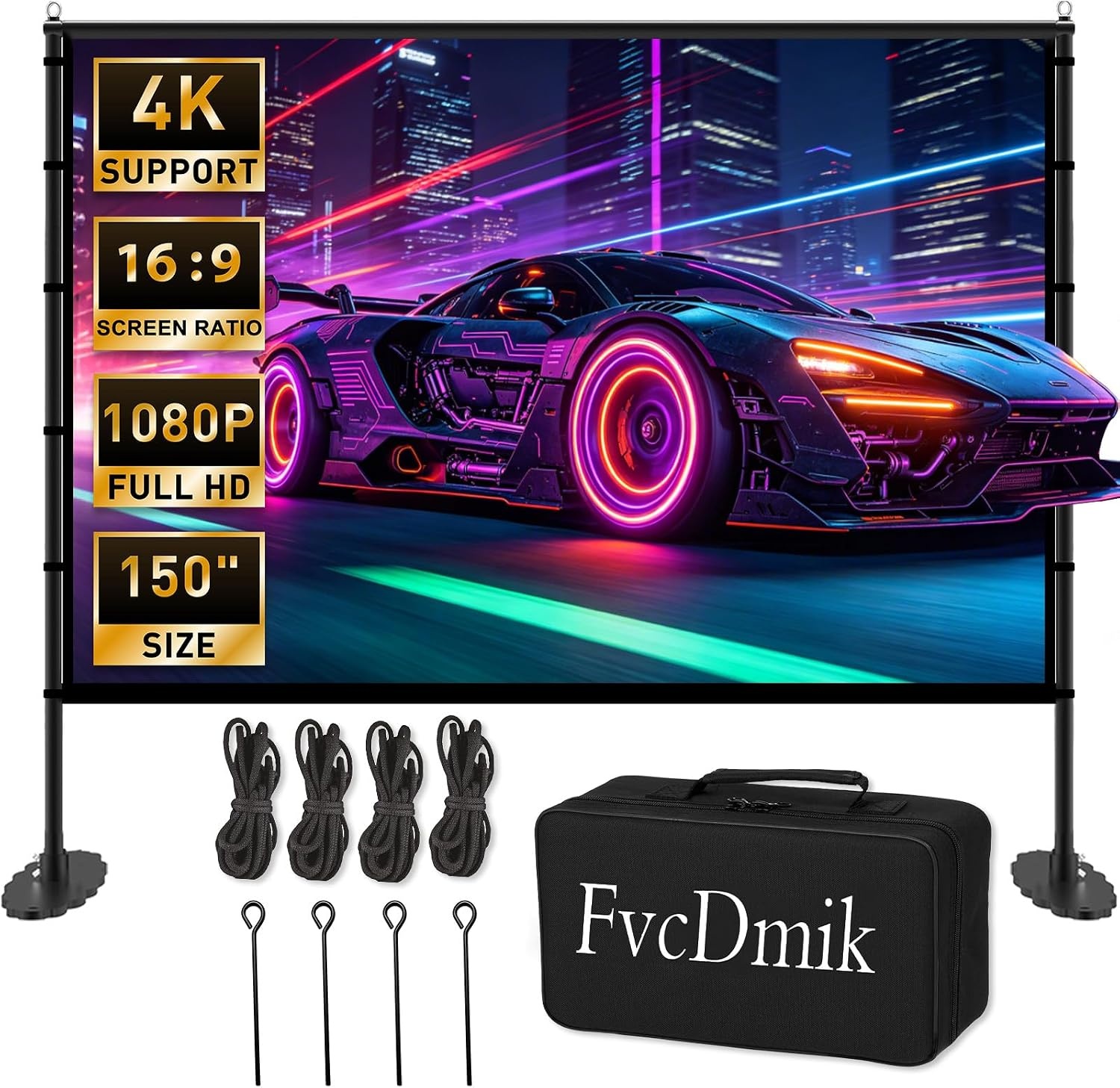
150 inch Projector Screen with Stand, 16:9, foldable
Biggest single upgrade to any projector on this list, packs down to a carry bag
A fabric screen gives up contrast to a fixed screen, and 150 inches is a lot to light up
Prices and availability were captured from Amazon Creators API and may change.
How I judge a projector, in order
Brightness first, always. If you cannot control the room, nothing else matters, because a washed-out image has no contrast, no color, and no shadow detail. I want ANSI lumens, the industry measurement taken across a nine-point grid on the screen. When a brand quotes a big number without the word ANSI, I assume it was measured at the panel, in a lab, at the center of the frame, with the lamp at full power and probably with the color wheel spinning in a way you will never see in your living room.
Resolution second, and this is where the marketing gets slippery. A true 4K chip resolves 4K. A 1080p chip that accepts a 4K signal and downscales it does not. Pixel shifting, where a fast chip flashes two half-images per frame to double the apparent pixel count, genuinely works and I have no problem with it, but it is a different thing from native 4K, and the listing usually will not tell you which one you are buying.
Placement third. Auto focus and auto keystone are genuinely useful outdoors, where the projector sits on a table and the kids bump it. But auto keystone crops pixels to square up the image, so you lose some sharpness every time it kicks in. A real zoom and lens shift is better, and almost nobody puts one on a portable.
Sound fourth, and fan noise right behind it. A projector that measures loud enough to hear over dialogue is a projector you will stop using. Built-in speakers solve the cable problem and almost never solve the audio problem, but for a backyard movie with the family, "good enough and already connected" beats "great and needs an amplifier."
XuanPad 4K smart projector: the biggest claim here
The XuanPad model is the one that reads like a full home theater in a single box. It advertises 6000 ANSI lumens, 4K, VIDAA Live TV, Netflix, AI voice control, 42W Dolby Audio, auto focus and auto keystone, plus WiFi and Bluetooth. On paper that is the most complete package in this comparison, and it is the one I would point a first-time buyer toward if they want to unbox it, set it on a patio table, and be watching something in ten minutes.
The number I would interrogate is the brightness. Six thousand ANSI lumens in a portable chassis at this price is a very large claim, and my rule after fifteen years of this is simple: if the brand will not put ANSI in front of it, or the measurement does not survive a real room, treat it as a ceiling rather than a floor. That does not make it a bad projector. It means the honest expectation is a good image at dusk and after dark, with some tolerance for a porch light, and a soft, gray image at 2 p.m. in July. Every projector at this price behaves that way. The ones that do not cost several times more.
The built-in VIDAA platform is the real differentiator. Netflix and live TV without a streaming stick, without an HDMI cable, without a laptop balanced on a cooler, is worth more outdoors than it sounds. Bluetooth audio out is the feature I would actually use, because it lets you send the soundtrack to a real speaker and keep the projector's own drivers for casual nights.
P62 Pro: the value smart outdoor projector
The P62 Pro takes the same idea and trims it down. Built-in apps with YouTube and Prime Video, dual speakers with Dolby audio, auto focus, WiFi and Bluetooth, and a body aimed squarely at backyard use. The listing says 4K support rather than native 4K, and I want to be precise about that, because the two phrases are not interchangeable. Support means it will accept a 4K signal and display it. What the panel actually resolves is a separate question, and on budget portables the answer is usually a 1080p-class chip, possibly with pixel shifting.
That is not a dealbreaker. At typical backyard viewing distances, a well-fed 1080p image on a 120 inch screen looks genuinely sharp, and most of the 4K advantage you paid for disappears the moment your source is a streaming app on hotel-grade WiFi.
What you are buying here is convenience at the lowest entry point in the group. It is the projector for someone who wants one cable, one remote, and a movie under the stars, and who is not going to run a colorimeter over it. Where it will show its limits is contrast in mixed light and audio at anything above conversation volume. The dual speakers will carry a comedy. They will not carry an action movie.
If your plan is a permanent outdoor setup with a fixed screen and a soundbar, spend the extra on the XuanPad. If your plan is a few movie nights a summer, this is the smarter buy, and the difference in the picture will bother you less than the difference in the receipt.
Epson Home Cinema 980: the honest 1080p pick
Here is the odd one out, and the one I would put in my own basement. The Epson Home Cinema 980 is a 3-chip 3LCD 1080p movie projector. No apps, no voice control, no streaming platform that will stop getting updates in three years. Just three LCD panels and a lamp, which is the recipe Epson has been refining longer than most of the brands in this comparison have existed.
Three-chip 3LCD matters because all three primary colors are on screen at once, all the time. Single-chip projectors, which is everything else in this table, produce color sequentially with a spinning wheel or a flashing LED, and some people see color fringing or rainbow artifacts because of it. If you are one of those people, 3LCD is the fix, and it is not a subtle difference.
The trade-offs are real and I will not pretend otherwise. It is 1080p, so there is no 4K story to tell. It needs a source, so budget for a streaming stick or a player. It is not built to be carried outside, and it is not the projector you hand to a teenager for a sleepover. What it is, is the projector you buy once and stop thinking about, because honest color and a clean 1080p image on a decent screen beat a shaky 4K claim every time in a room you can actually darken.
For a covered patio with a screen that stays up, this is the pick. For a lawn and a carry bag, it is the wrong tool.
The 150 inch screen: the part most people skip
I have said this in every install consultation I have ever done. The screen is half the picture. A 150 inch 16:9 portable screen with a stand, a carry bag, and ground nails costs less than a mid-range soundbar, and it will improve any projector in this article more than spending the same money on a projector upgrade would.
Two details matter more than the size. First, wrinkle-free and foldable. Wrinkles in a projection screen show up as shadows across faces and bands across skies, and they show up worst in bright scenes, which is exactly when you want the screen to look its best. A screen that folds and still pulls flat is doing real work. Second, the stand and the ground nails. Outdoors, wind is the enemy, and a screen that turns into a sail in a gust of 10 mph is a screen that ends up on the grass. Nail it down or weight the base.
The honest limitation is contrast. A fabric screen reflects ambient light back at the audience, so it cannot do what an ambient light rejecting fixed screen does in a room with windows. For a backyard after sunset, that is irrelevant. For a patio with a floodlight nearby, it matters, and no projector on this list will save you.
150 inches is also a lot of surface to light. Sit closer than you think, or accept a dimmer image than you would get at 100 inches. Throw ratio is the math here: a projector that needs 1.2 feet of distance per foot of image needs roughly 15 feet of throw to fill a 150 inch screen, which is more room than most backyards have. Measure before you buy the screen.
The trade-offs, stated plainly
The XuanPad gives you the most features and the biggest brightness claim, and in exchange you accept that the claim is a claim, and that a smart platform baked into a projector ages faster than the optics.
The P62 Pro gives you the lowest cost of entry and the least setup friction, and in exchange you accept 4K support rather than native 4K, and audio that works for dialogue but not for explosions.
The Epson gives you real 3-chip color and a projector that will still look right in five years, and in exchange you give up portability, built-in apps, and any 4K language on the box.
The screen gives you the single biggest visible improvement per dollar in this entire article, and in exchange you give up some contrast versus a fixed screen and you take on the job of anchoring it so it does not fly away.
What I would actually do
For a family that wants movie nights on the lawn with minimal fuss, the P62 Pro plus the 150 inch screen is the setup I would build, and it leaves budget for a speaker you can actually hear. For a covered patio where the projector lives on a shelf and the screen stays up, the Epson Home Cinema 980 is the pick, with a streaming stick, and you will not regret it. For a one-box solution where you want the apps, the audio, and the highest brightness claim in the group, the XuanPad is the one to look at first.
Whoever you buy from, buy the screen. I have watched too many people project onto a wrinkled white sheet and conclude that projectors look soft. They do not. Rooms do.