Picking a home theater projector is less about chasing the biggest number on the box and more about matching a machine to the room it will live in. A projector that looks washed out in a living room with west-facing windows can look spectacular in a basement with the lights off, and the reverse is just as true. Brightness, throw distance, resolution processing, and input lag all pull against each other, and the right compromise depends on whether you are building a permanent theater or throwing a sheet on the fence for a summer movie night.
The six models in this guide cover that spread. There is a 4K PRO-UHD Epson with a 3-chip 3LCD engine for permanent installs, a short throw Optoma aimed at gaming and golf simulators, a Roku TV portable built for patios and backyards, and three budget mini projectors that make a first home theater projector purchase painless. Every card below matches one model to one listing, so the product you read about is the product the link points to.
Related: How to Set Up a Projector in a Room With Windows
Quick answer
The Epson Home Cinema 3800 4K PRO-UHD 3-Chip 3LCD Projector with HDR Technology is the strongest fit for a permanent home theater because it pairs a 3-chip 3LCD light engine with 4K PRO-UHD processing and HDR support, which is the combination most living rooms and dedicated rooms are actually built around. Choose the Optoma GT1080HDR instead when short throw placement, low input lag gaming, or golf simulator duty matters more than maximum resolution.
Home theater projector features worth comparing
Five things separate these six models, and none of them is the marketing headline on the box.
Brightness, stated honestly. ANSI lumens are the industry standard measurement. When a brand quotes a big number without naming ANSI, treat it as a best-case figure measured under ideal conditions. A dim room forgives a modest projector. A room with windows does not.
Resolution versus processing. Native 1080p panels and 4K PRO-UHD processing are two different things, and both can look excellent. Pixel shifting, where a projector flashes a panel faster than your eye can track to build a higher-resolution image, genuinely works. What does not work is a 1080p chip advertised as native 4K.
Throw ratio and placement. Throw ratio is the distance from lens to screen divided by image width. A short throw model sits close to the wall and is far easier to live with in a small room, while a standard throw unit needs more depth behind the seats.
Input lag and refresh behavior. If a console or a golf simulator is part of the plan, lag matters more than contrast. A projector that feels sluggish on a menu will feel worse in a match.
Smart platform and portability. Some of these run a built-in streaming interface over WiFi, some include a screen, and some are small enough to carry outside and pack away. Built-in streaming saves you from adding a stick. A bundled screen saves you from buying one.
Home theater projector picks compared
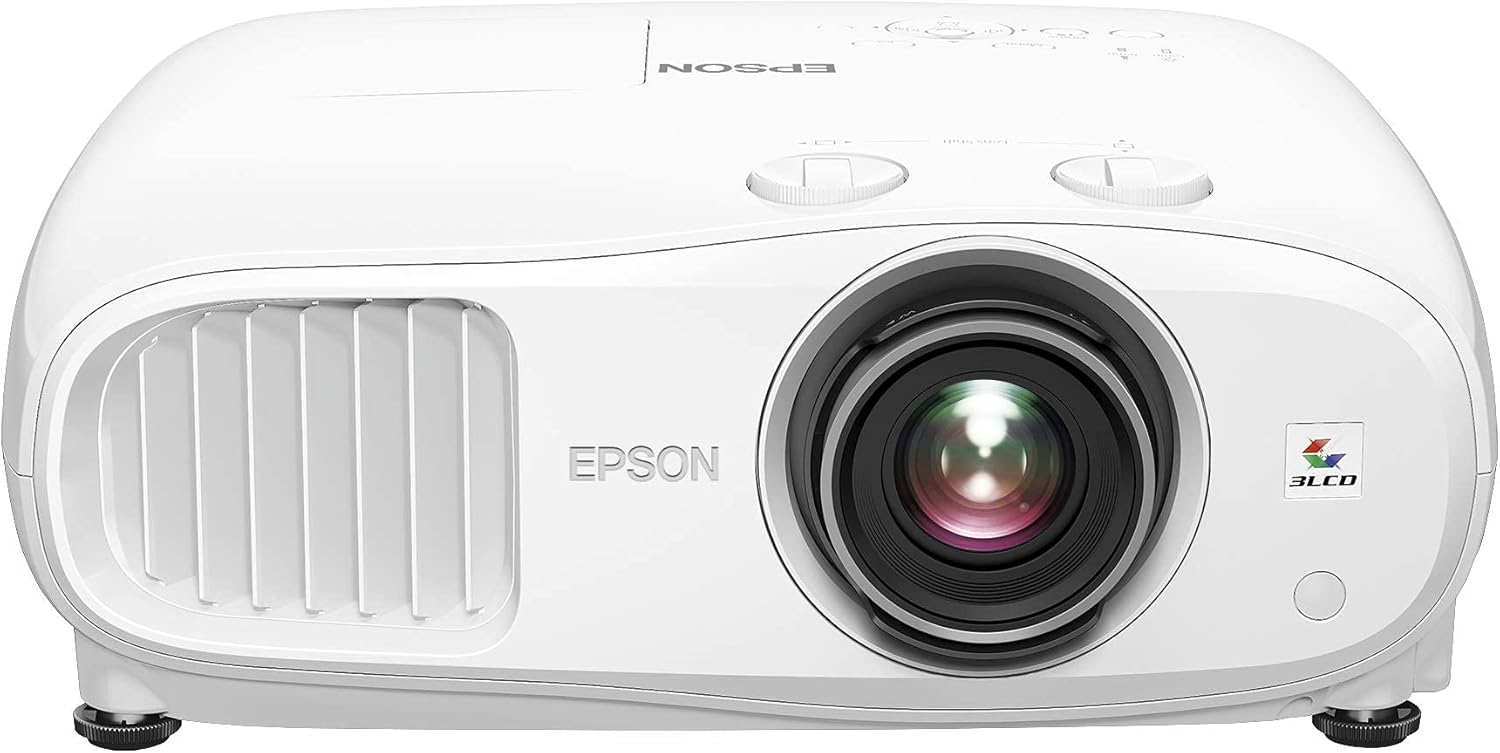
Epson Home Cinema 3800 4K PRO-UHD 3-Chip 3LCD Projector with HDR Technology
A 3-chip 3LCD design with 4K PRO-UHD processing and HDR support, aimed at permanent home theater installs where color brightness and resolution processing both matter.
Visit on Amazon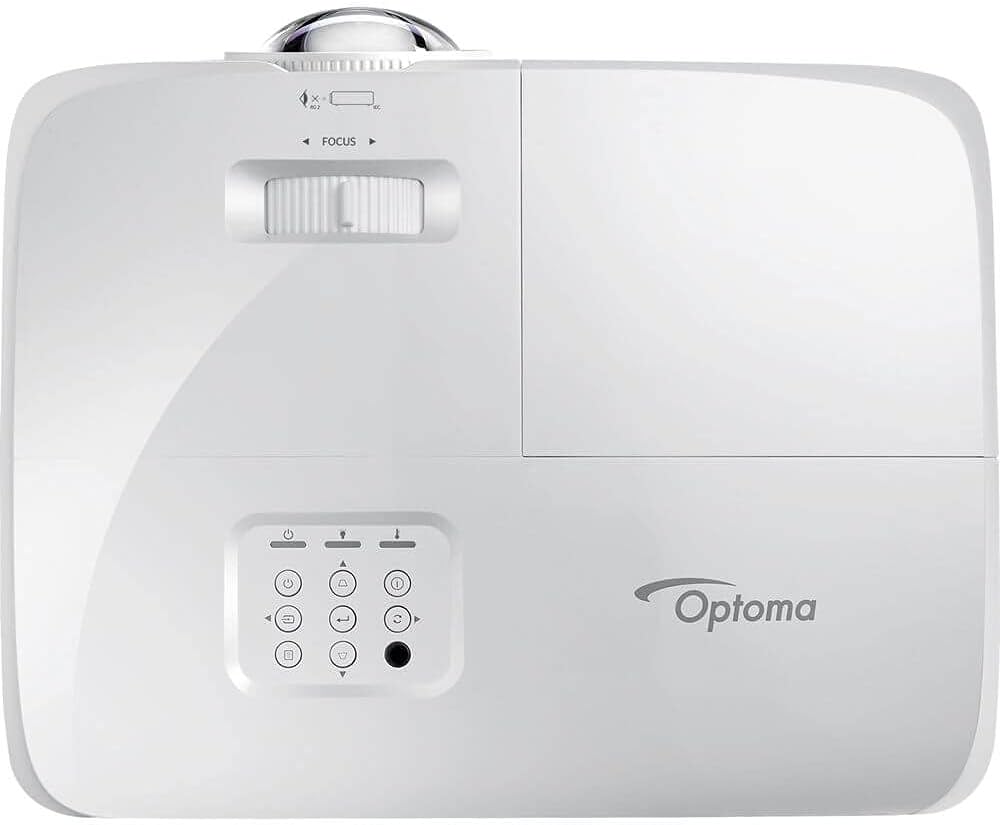
Optoma GT1080HDR, Full HD 1080p Short Throw Projector, 3,800 Lumens, 4K HDR Compatible, Low Input Lag Gaming, Home Entertainment & Golf Simulator Ready
Check current Amazon price
A Full HD 1080p short throw projector rated at 3,800 lumens, with 4K HDR compatibility, low input lag gaming and golf simulator positioning.
Visit on Amazon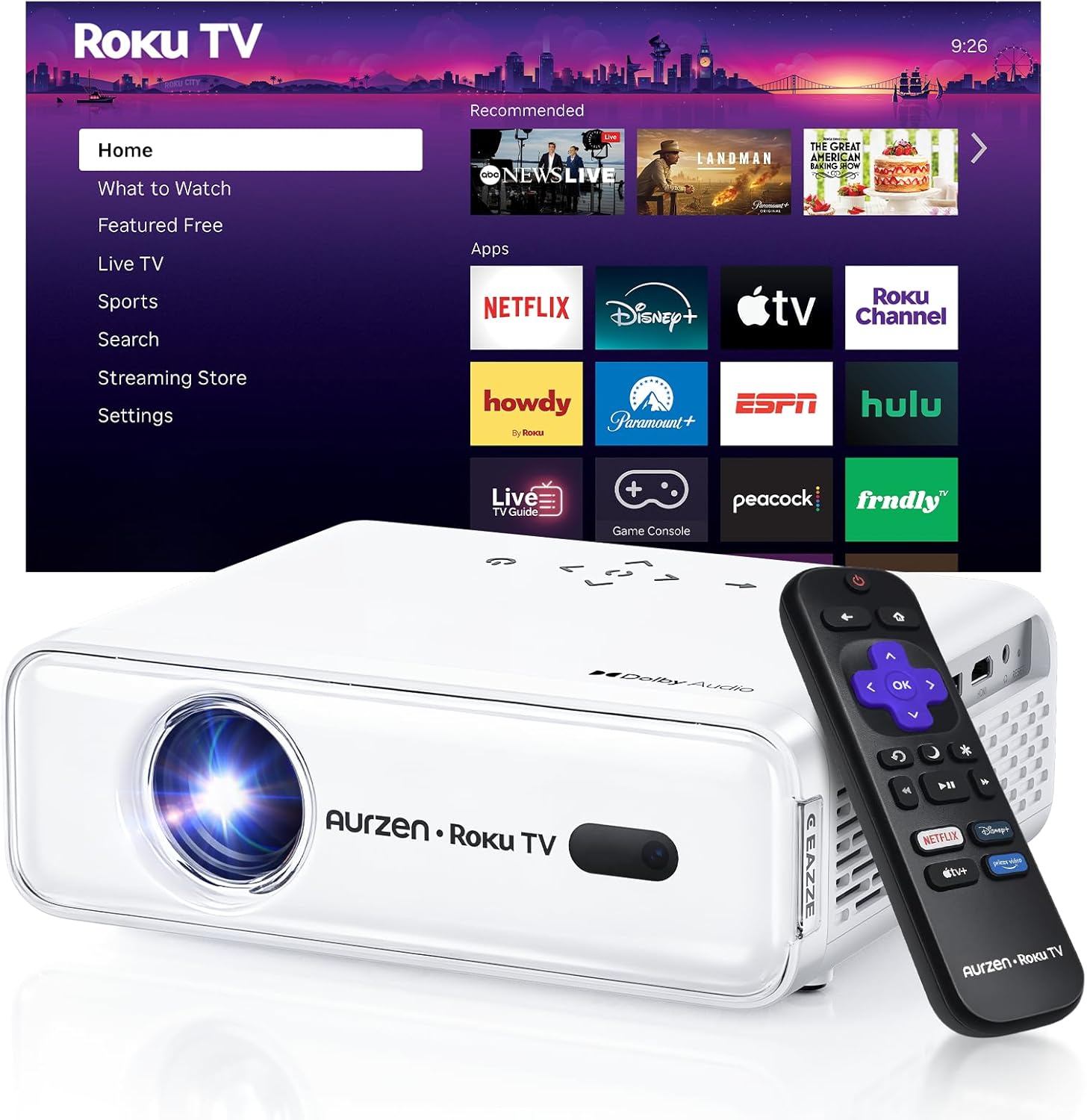
Aurzen Roku TV D1R Smart Portable Outdoor Projector with WiFi and Bluetooth
A portable outdoor projector with the Roku TV smart platform built in, plus WiFi and Bluetooth for streaming and audio without extra boxes.
Visit on Amazon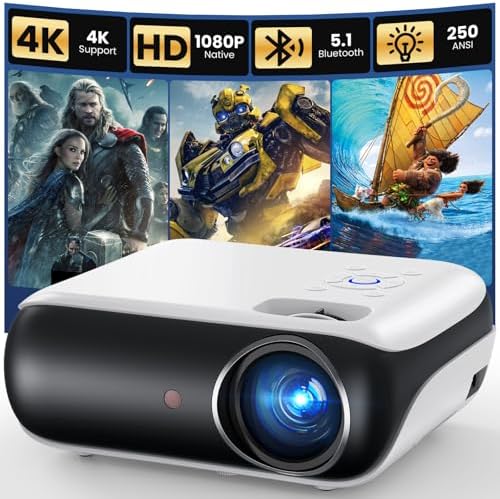
HAPPRUN Native 1080P Outdoor Smart Projector-Standard
Check current Amazon price
A native 1080p smart projector built for outdoor use, with the standard configuration rather than an upscaled budget panel.
Visit on Amazon
PANSEBA 1080P Mini Projector with Screen, Portable Home Theater Movie Projector with Two-Way Bluetooth, HDMI/USB Input for Smartphone/TV Stick, Ideal for Indoor & Outdoor Use, White
Check current Amazon price
A 1080p mini projector sold with a screen, offering two-way Bluetooth and HDMI/USB inputs for phones and streaming sticks, indoors or out.
Visit on Amazon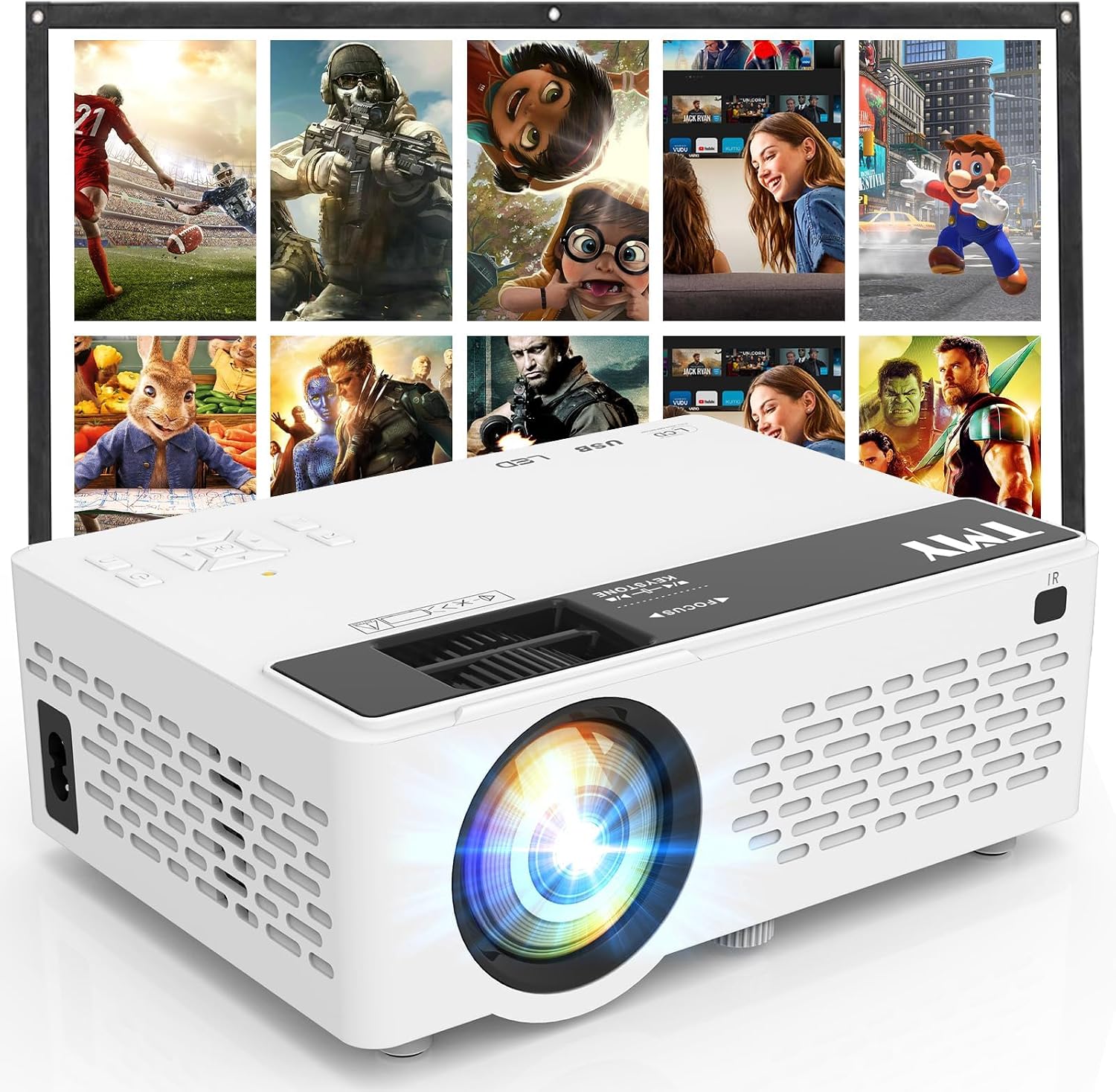
TMY 1080P Mini Portable Projector, 2-way Bluetooth, with 80in Screen
A 1080p mini portable projector bundled with an 80 inch screen and 2-way Bluetooth for flexible indoor and outdoor setups.
Visit on AmazonPrices and availability may change. Check the retailer for current details.
How these products were compared
This guide compares stated brightness claims, resolution and processing type, throw distance and placement flexibility, connectivity and built-in streaming, and portability including any bundled screen. Product names, images, and retailer links are matched by ASIN so that every card points to the product shown.
Nothing here is presented as a lab measurement or a calibrated session unless the manufacturer states it directly. Where a model lists a brightness figure or a resolution technology, that is the manufacturer's own specification. Where a model is described as short throw, portable, or smart, that comes from the product listing itself.
Because pricing and stock on projector listings move around, no current price is printed in this article. Use the link on each card to confirm the current price, availability, and return terms before you buy, and check that the seller is the one you expect.
How to choose the right home theater projector
Start with the room, not the spec sheet. If you can darken the space completely, a lower-output projector can still look excellent, and your budget is better spent on resolution processing and color accuracy. If the room has windows you cannot cover, or you plan to watch with lights on, brightness becomes the single most important number and everything else is negotiable. This is why the same projector can earn rave reviews in one house and disappointment in another.
Next, measure your throw distance before you fall in love with a model. Stand where the projector will actually sit, measure to the screen wall, and divide by the throw ratio you are considering. Short throw models are the answer for tight rooms, apartments, and any setup where people walk between the projector and the screen. Standard throw models generally give you more placement freedom for a fixed ceiling mount, but they need the depth.
Then decide what the projector has to do beyond movies. A console or a golf simulator changes the priority list toward input lag and short throw geometry. A patio or backyard setup changes it toward portability, built-in streaming, and whether a screen is included. For sizing guidance, see our notes on projector screen size and seating distance.
Finally, think about the light source and the long term. Lamp based projectors have a consumable part, laser and LED designs trade that for a higher upfront cost. Whichever you choose, budget for the screen and the mount as part of the purchase rather than as an afterthought, because those two items shape the image as much as the projector does.
Epson Home Cinema 3800
The Epson Home Cinema 3800 is the pick here for anyone building a permanent room. Its 3-chip 3LCD light engine is the reason it earns that spot: three separate LCD panels mean the projector produces its color and its white brightness from the same optical path, which is the architecture most dedicated home theaters are designed around. Add 4K PRO-UHD processing and HDR support, and you have a projector aimed squarely at people who are going to mount it, run cables, and leave it there.
The trade-off is straightforward. This is the most expensive model in this group and the least portable by a wide margin. It wants a fixed installation, a real screen, and a room where you can control the light. If your plan involves carrying the projector to the backyard, packing it for a trip, or setting it on a coffee table, one of the portable models below will serve you better for a fraction of the commitment.
Alternatives to consider
The Optoma GT1080HDR is better suited to gaming nights, golf simulators, and rooms where the projector has to sit close to the screen, thanks to its short throw design and low input lag positioning. The Aurzen Roku TV D1R is a stronger fit when you want streaming built in, a portable body, and a setup that moves between the living room and the patio without a laptop or a streaming stick.
The HAPPRUN Native 1080P Outdoor Smart Projector-Standard, the PANSEBA 1080P Mini Projector with Screen, and the TMY 1080P Mini Portable Projector cover the budget and outdoor end of the list. All three are 1080p designs intended for casual viewing, and two of them ship with a screen, which removes the most common hidden cost of a first projector setup.
Day-to-day use and maintenance
Where you place the projector matters more than most people expect. Leave clearance around the intake and exhaust vents, because heat is what shortens the life of any projector, lamp or LED. Keep the lens cap on when the unit is not in use and clean the lens only with a proper optical cloth, never a paper towel or a shirt sleeve. Dust is the quiet enemy of image quality, so if the room is carpeted or the projector lives near a kitchen, plan on checking the filter or the vents more often.
For portable models, storage is part of maintenance. Coil cables loosely, keep the remote and any streaming stick in the same bag, and let the projector cool down fully before it goes back in the case. If you are running a Bluetooth speaker or soundbar, pair it once and leave the pairing alone; re-pairing every movie night is the fastest way to make a good projector feel annoying.
Room treatment is free performance. Dark walls, a dark ceiling, and a screen with a gray or matte surface all raise perceived contrast without touching a single setting. If you cannot darken the room, aim for the brightest model you can justify and accept that black levels will be what they will be. A projector that is bright enough to watch comfortably beats a projector with better contrast that you cannot see.
Buying checklist
- Measure the throw distance from your planned mounting point to the screen wall, then divide by the throw ratio.
- Choose brightness for your normal viewing conditions rather than an occasional best case.
- Confirm that the exact model you are ordering includes the smart platform, Bluetooth, or bundled screen you are counting on.
- Read the cleaning, filter, and ventilation instructions before you mount anything permanently.
- Verify the current retailer price, availability, and return terms, since projector listings change often.
Final recommendation
Choose the Epson Home Cinema 3800 when you are building a permanent home theater with a fixed screen, a mount, and reasonable control over the light, because its 3-chip 3LCD engine with 4K PRO-UHD processing and HDR support is the most theater-appropriate combination in this group. Choose the Optoma GT1080HDR when short throw placement, low input lag gaming, or a golf simulator setup is the priority, and choose one of the portable 1080p models when the projector needs to travel, live outdoors, or fit a tight budget. Match the projector to the room and the routine first, and the rest of the decision gets much simpler.