
I have hung projectors in blacked-out basements and in living rooms with three west-facing windows, and the room always decides the outcome. That is the rule I brought to this 4K projector comparison. Fifteen years of installing, calibrating, and occasionally un-installing other people's mistakes around Raleigh taught me that a mid-tier projector in a controlled room beats a flagship in a bright one, so I did not rank these four by price. I ranked them by the job each one can actually finish.
Related: Ambient Light Rejection Screens Explained
The XGIMI HORIZON 20 Max is the best pick for a room you can darken. The X7 is the best value for a first real setup. The Aurzen EAZZE D1 is the one that goes outside. And the Universal Projector Ceiling Mount is the part that makes any of them look like a permanent install instead of a laptop balanced on a chair. That is the short version. The long version is about ANSI lumens versus marketing lumens, what "4K input support" actually means on a 1080p panel, and why the least exciting item in this group changes how the other three look on your wall.
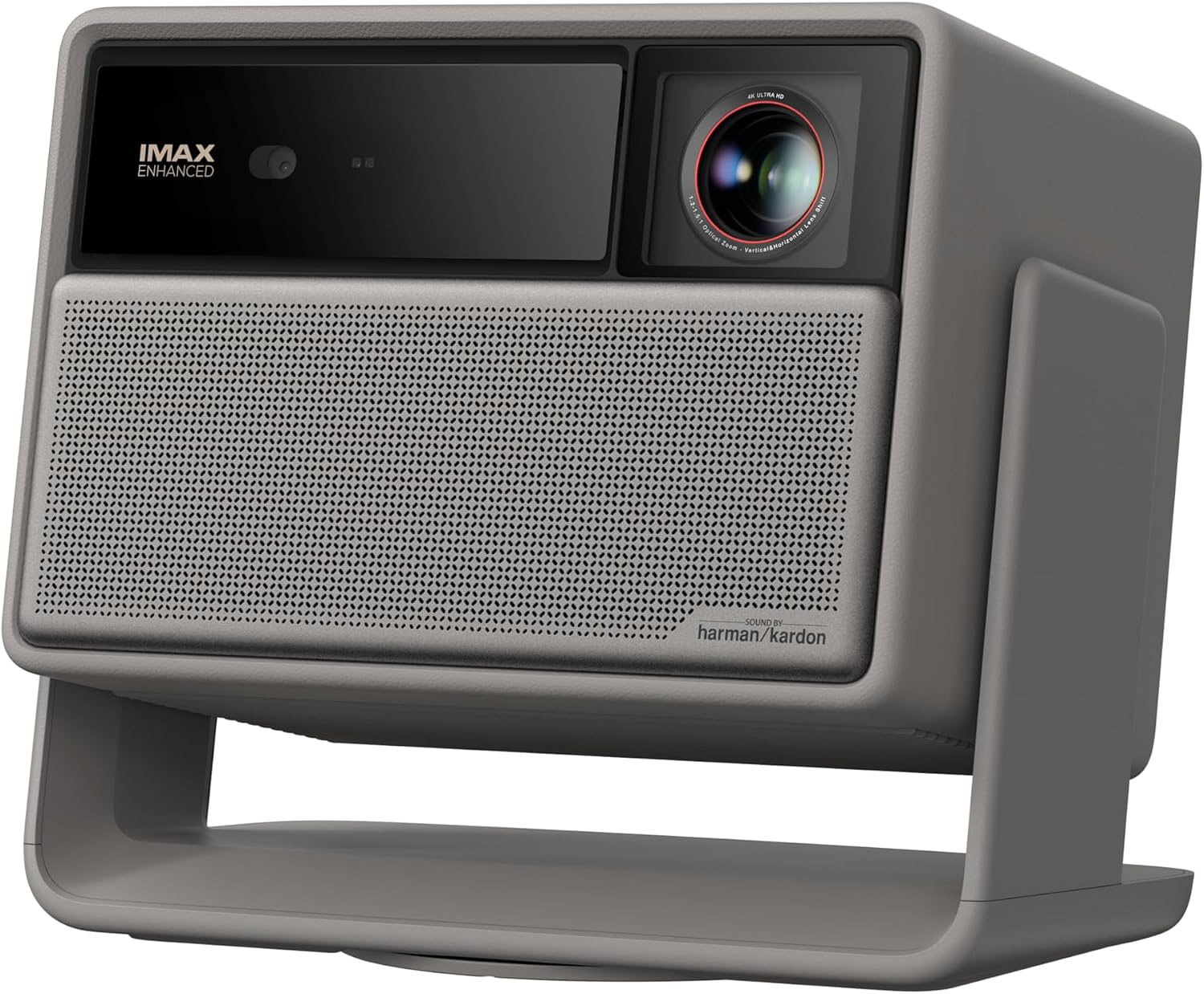
XGIMI HORIZON 20 Max 4K Projector Triple Laser Home Theater 5700 ISO Lumens
Triple laser light engine and a 5700 ISO lumen rating, so it holds an image with room lights on and there is no lamp to replace
Big, heavy, and the most expensive way into this list; it deserves a real screen and a real mount
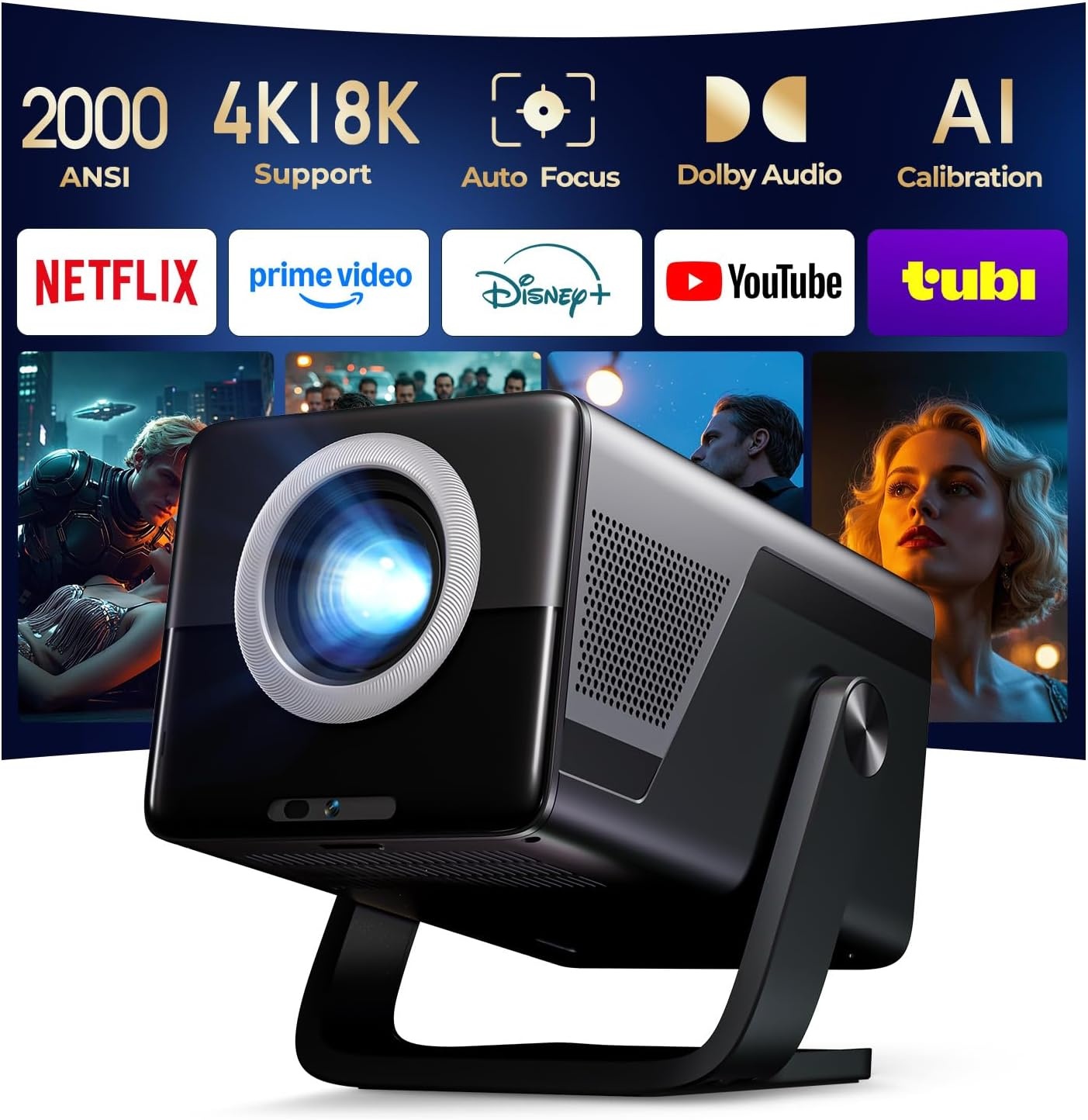
X7 2000 ANSI Smart Projector, 4K/8K Input Support, Native 1080P, 125% sRGB
An honest 2000 ANSI lumen figure, a native 1080p panel, and 125% sRGB coverage at a first-projector budget
It accepts a 4K signal, it does not resolve one; blacks and fan noise are tier-appropriate, not theater-grade
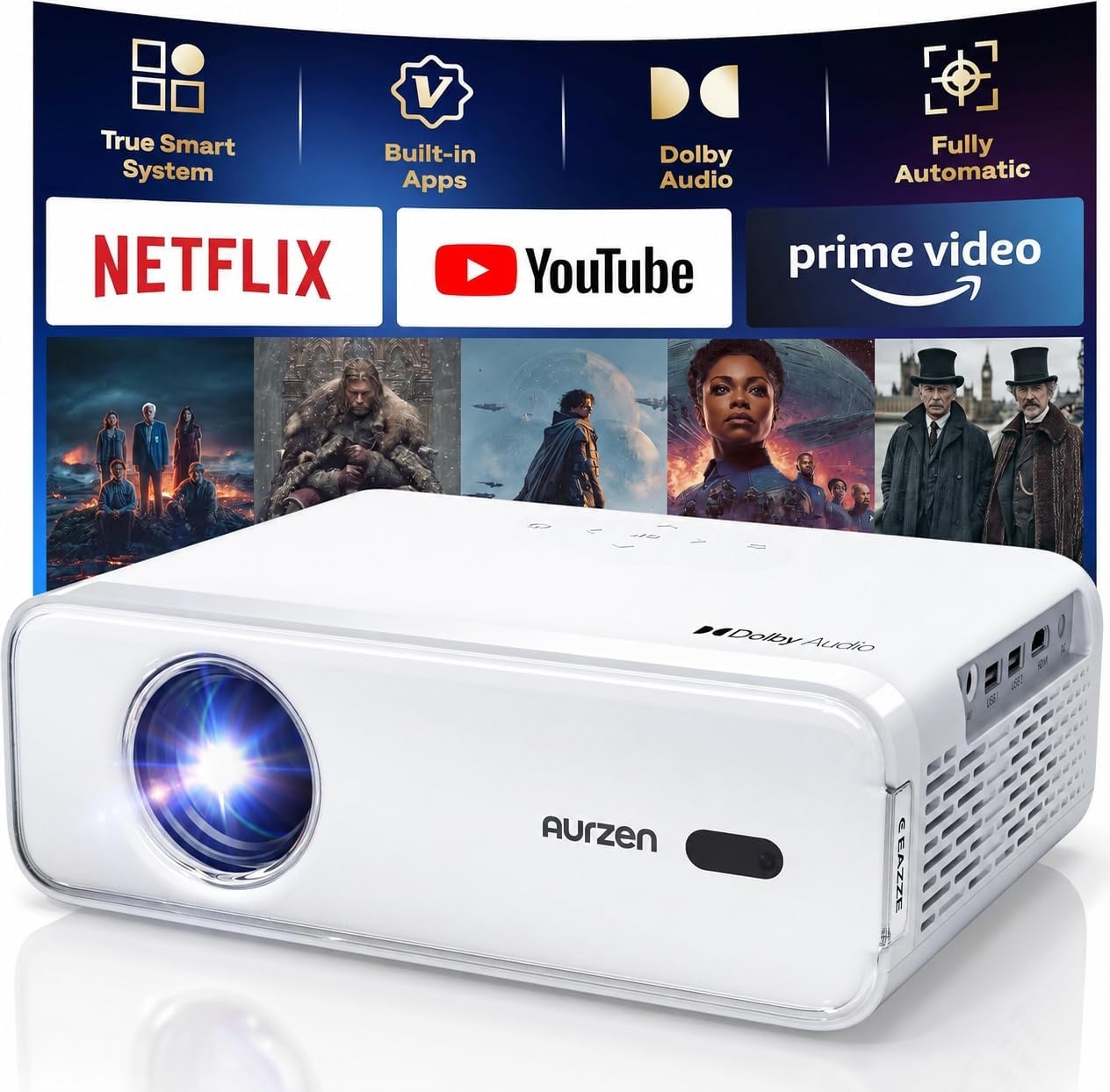
Aurzen EAZZE D1 Smart Portable Outdoor Projector with WiFi and Bluetooth
Portable, wireless streaming over WiFi, Bluetooth audio out to a real speaker, built for the backyard
No ANSI brightness figure published, so plan on darkness; it is not a living room projector

Universal Projector Ceiling Mount - White
Gets the projector off the coffee table, out of the light path, and into a repeatable position you can fine-tune
Requires a joist, a drill, and twenty minutes of patience; nothing about it is plug and play
Prices and availability were captured from Amazon Creators API and may change.
What I check before I trust a spec sheet
Four things, in this order.
Brightness in a named standard. ANSI lumens and ISO lumens are both measured, published standards. "Lumens," "LED lumens," and "high brightness" are not. If a listing will not name the standard, I treat the number as inflated until something proves otherwise. This is the single best predictor of whether you will actually enjoy the projector in your room.
Throw ratio and placement. Throw ratio tells you how far the projector sits from the screen for a given image size. A short throw in a small room keeps the projector out of the seating area and out of the walking path. A long throw in a big room keeps the fan noise behind your head, which matters more than people expect.
Optical zoom and lens shift. Optical adjustments move the image without moving the projector. Keystone correction does it digitally by resampling the picture, and the harder you lean on it, the softer the image gets. If your only alignment tool is keystone, your install is fragile.
Fan noise at full power. Every projector is quiet in eco mode. The real question is what it sounds like during a bright scene in a dark room, when the light engine is working hardest. If you can hear it over dialogue, you will notice it forever.
XGIMI HORIZON 20 Max: the laser flagship
This is the only projector in the group that behaves like permanent infrastructure rather than a gadget. The triple laser light engine and the 5700 ISO lumen rating are the headline, and for once the headline is the useful part: light output is what buys you forgiveness. A laser projector at this brightness level can put a watchable image on a wall with the lights on, and it can put a genuinely good image on a proper screen in a room you control.
The second benefit is the one people forget until year three. There is no lamp to replace, no dimming curve to ride down, and no bulb hours counter ticking in the back of your mind. You buy it once and you stop thinking about it.
The trade-offs are real. It is big, it is heavy, and it is the most expensive item here by a wide margin. It also deserves better than a bare wall. If you are spending at this level, budget for a screen and for the mount, because a flagship projector aimed at a painted wall is a waste of a flagship projector.
$2,249.00
X7: 2000 ANSI lumens and native 1080p
Here is the listing I trust most in the budget tier, and it is entirely because of the wording. The X7 quotes 2000 ANSI lumens, not "2000 lumens." It says native 1080p, which is an admission that the panel resolves 1080p. And it says 4K and 8K input support, which is a different claim than 4K resolution.
Read that carefully, because it is the most misunderstood spec in this whole category. A 4K player or streaming box will hand the X7 a 4K signal. The projector accepts it, processes it, and displays it on a 1080p panel. That is downscaling, not 4K. It still looks good, and a clean 1080p image beats a faked 4K image every time. It is just not the same thing, and the listing is honest about it.
2000 ANSI lumens is a real number, and it is enough for a dark room at a reasonable screen size. It is not enough for a room with a window and a lamp both on. The 125% sRGB coverage is genuinely useful for the price, because it means the projector can push a little past the standard color triangle instead of clipping at the edges. Expect the contrast and black level of the tier, expect the fan to make itself known, and plan your placement carefully, because optical zoom and lens shift are usually the first things cut at this price.
$169.99
Aurzen EAZZE D1: the backyard projector
This one is not competing with the other two, and that is the point. It is portable, it streams over WiFi, and it sends audio out over Bluetooth to a speaker that can actually fill a yard. For movie night on a patio or a sheet on the side of a garage, that combination is exactly right.
What it does not publish is an ANSI brightness figure, and I take that seriously. When a brand will not name the standard, you should assume the projector needs darkness to look good. That is not a flaw in an outdoor projector. A backyard screen after sunset is a dark environment, and that is the scenario this product is built for.
So set expectations by the room. After sundown, with the porch light off, this is a fun, flexible, genuinely portable setup you can carry inside when the season ends. Aimed at a living room wall at noon, it will look like a fog. The Bluetooth audio path is the feature I would actually use most, because built-in projector speakers are almost always the weakest link in an outdoor setup.
$109.99
Universal Projector Ceiling Mount: the piece that finishes the install
Nobody gets excited about a white ceiling mount, and it is still the upgrade that changes how a projector feels in a room. On a table, a projector eats a seating position, throws light back at whoever sits near it, and gets bumped out of alignment every time someone reaches for a drink. On the ceiling, it is out of the light path, out of the way, and in a position you set once.
It is universal and it is white, which matters more than it sounds: a white mount disappears against most ceilings, and universality means it will follow you to the next projector instead of being a one-time purchase.
Before you drill, check three things. Find a joist, because drywall anchors are not a plan for something hanging over your head. Compare the mount's rated weight capacity to your projector's actual weight. And measure the drop distance, because a ceiling mount that puts the projector too close to the ceiling limits how far down your image can land. This is the cheapest item in the comparison and the one most likely to improve your picture, simply by making proper alignment possible.
The trade-offs, tier by tier
At the top of this group you are paying for light output and a laser light engine. What you give up is size, weight, and money, and you take on the responsibility of a screen and a mount worthy of the projector.
In the middle you get an honest ANSI rating, native 1080p, and good color coverage for the money. What you give up is brightness headroom, black level, and quiet operation. This tier rewards a dark room more than any other, because it has the most to gain from controlling the light.
At the portable end you get flexibility that nothing else here offers. What you give up is any real chance against ambient light, and that is a fair trade for a projector you can carry to a friend's yard.
Matching the projector to the room
A blacked-out basement or a dedicated room with light control: any of these three can work, and the budget pick will surprise you. This is where a 2000 ANSI lumen projector earns its keep.
A living room with windows: this is the laser's home turf. Nothing else in the group can hold an image against daylight, and even then an ambient light rejecting screen does more for the picture than the next step up in projector would.
A patio, a garage door, a campsite: the portable unit, every time, paired with a Bluetooth speaker and a dark sky.
A ceiling, in any of those rooms: the mount, because a projector that never moves never needs realigning.
Questions I get every week
Are ISO lumens and ANSI lumens the same thing? They are different measurement standards, and they are not interchangeable numbers. Both are better than an unlabeled figure. What matters is that the listing names a standard at all.
Does 4K input support mean it is a 4K projector? No. It means the projector can accept and process a 4K signal. Resolution is determined by the panel, and the budget pick here is native 1080p by its own admission.
Do I really need the ceiling mount? You need the projector positioned repeatably. A shelf can do that. A coffee table cannot, and a mount is the cleanest way to get there.
Can the portable projector be used indoors? Yes, and it will look best at night with the lights off. That is the same rule that applies to every projector in this article, just with less headroom.
The bottom line
If you have a room you can darken and you want one purchase that ends the upgrade conversation, the XGIMI HORIZON 20 Max is the pick, and its laser light engine is the reason. If you want the honest version of a budget 4K-input projector with a real ANSI rating, the X7 is the one I would hand to a friend. If your theater is a backyard, the Aurzen EAZZE D1 is built for exactly that. And whatever you choose, put it on the Universal Projector Ceiling Mount, because the best projector in the world aimed from a coffee table is still a compromise.
Room control first. Hardware second. That order has never once let me down.